Hello. Just yesterday everything was working. I did like it was explained in the last Tinderbox meeting. And today nothing works. I tried to restart both Tinderbox and Claude, but nothing helps.
Claude just fails to execute any tool call. Tinderbox version 11
What should I do?
Choose File ▸ Disable AI Integration. The choose File ▸ Enable AI Integration.
Quit Tinderbox and Claude.
Open Claude, and try again; with luck, that will reinstall MCP.
Partly in answer to the query but more an accolade to the new feature.
I had a remarkable experience today working with the new Claude-Tinderbox integration. I was working with a financial tracking file in TBX where each note’s attributes contain different policy details. I’ve wanted to create a poster to see the whole financial picture at a glance, but it always felt like too much work. With Claude, I managed to do it in no time. I created both an interactive poster inside TBX and a separate graph artifact in Claude. It was marvelous.
AI integration should be enabled in TBX. Start with both Claude Desktop and your TBX file closed. When you open Claude, it automatically opens a new, empty TBX file. Just close that and open the one you actually want to work with. After that, you can ask Claude to do whatever you need. As long as I started each time with both Claude and TBX closed, and opened Claude first, there were no hiccups. This is demonstrated excellently by Jacob in the meetup video.
Here are some of the prompts I used:
“Create a poster note showing the financial position across time”
“You didn’t achieve that as I intended it - create the graph as an artifact in Claude first, and I’ll say if it’s what I want”
“Yes, that’s the right graph - now implement it in TBX”
“Display this info differently as an artifact in Claude”
“This is better, now create same as a poster in TBX”
“Make projections based on my data”
“Please put this analysis as a note in TBX”
It all worked smoothly. This feature has endless potential. Great update.
5 Likes
Would love to see a screenshot, perhaps with sanitized data….
yes, please provide us with a data sanitized screenshot
and: did you provide Claude directly or through a note in TBX with any data to work from? @Estomm
I’ve been “playing” with Tinderbox for two years and never found the time to really get into it. Connecting with Claude has opened up a whole new world. I had the same initial problems with using AI, but now Claude has been working for a while and is turning my thoughts into Tinderbox. I’m speechless. It’s amazing.
And yes, sometimes Claude makes mistakes too.
Andreas
2 Likes
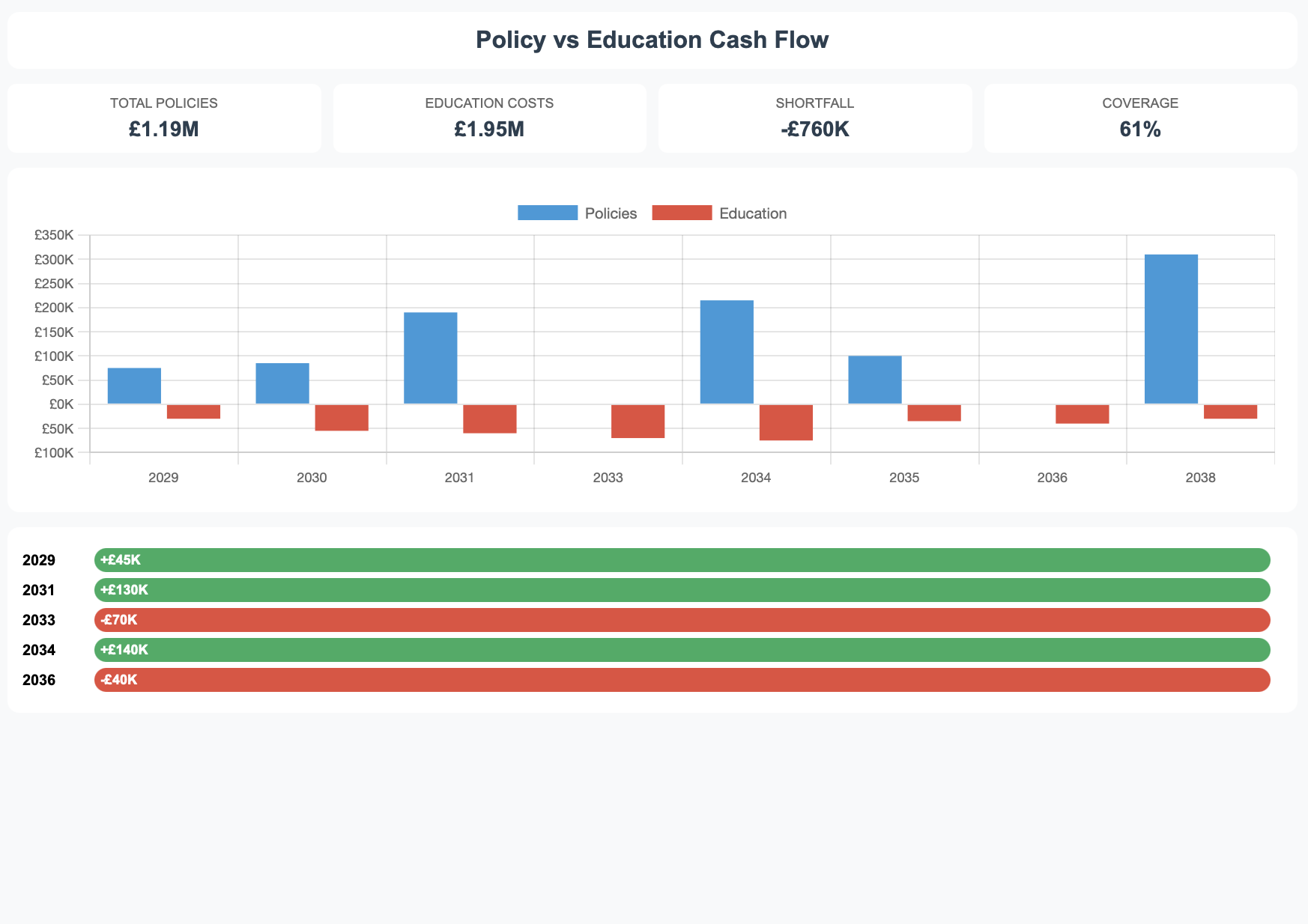
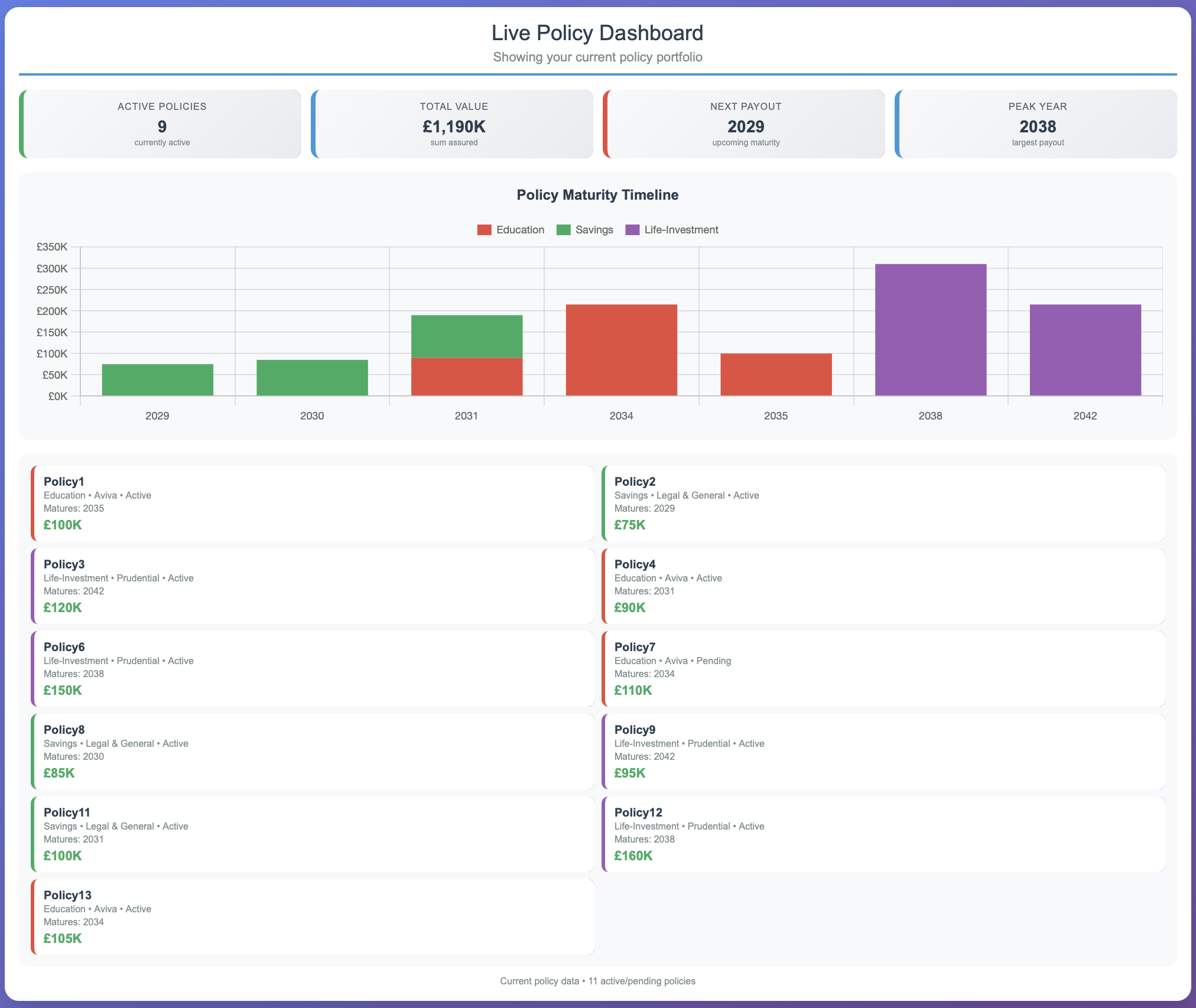
Used Claude to make a TBX demo close to what I was working on. Used it generate the fictitious data, make the notes, fill the attributes, and build the posters.
Attached:
Demo .tbx file, which includes the notes Claude generated on how it built the dynamic poster
Hard-coded poster in TBX
Dynamic poster in TBX
Complex, interactive Claude artifacts can be generated from the same TBX data.
It really comes to life when working with real, meaningful data, but this gives a close idea.
demo.tbx (382.1 KB)
3 Likes
what Attribute besides $PosterTemplate did you work with @Estomm
Thank you for sharing this!
That’s the thing — it’s really Claude that needs to know how to make the poster and which attributes to use, and then it will generate it for you.
For example, here’s a set of prompts I just used to produce another poster in the same document:
“Which Tinderbox file do you see open?”
“Study the notes with policy details (named Policy1, Policy2, etc.) and let me know when done.”
“Do you know how to make a poster in TBX? Consult your notes in TBX to bring yourself up to speed.”
“Make a poster note showing cumulative payments over the years for each policy.”
“That didn’t render as I intended. Create an artifact in Claude first.”
“Great — now make a simpler version in TBX to replace the one you just made. My focus is a cumulative premium payments dashboard.”
This is useful because, while I know the individual steps for building a poster in TBX, I often need to consult previous examples when rendering a more complex one.
So, to answer your question directly: I’d need to open the TBX file to see exactly which attributes Claude used alongside $PosterTemplate. On the occasion you ask about, it left itself (or me) this note:
This poster uses proper Tinderbox template syntax to pull live data directly from your policy notes. It will automatically update when you change policy amounts, dates, or statuses.
The template uses:
–^value(collect())^to gather policy data
–^repeat()^...^endRepeat^to iterate through policies
– Real-time calculations for totals and statistics
– A live timestamp showing when data was last updatedThis demonstrates the correct way to create dynamic Tinderbox posters.
If it struggles, you can nudge it by pointing out which attributes to use — in this case, I didn’t need to.
1 Like
great! Thanks for sharing this @Estomm
You are most welcome. I actually learnt how to make the most of this feature by watching Jacob’s meetup video. The general setup is explained clearly in aTbRef.
1 Like
It just does not work. I tried that ten times at least in exactly the same sequence, but it does not help.
I’m sure this is frustrating, but we need to know more the problem you’re experiencing.
The oddest thing here is that you must Quit Tinderbox, launch Claude Desktop, and let Claude start Tinderbox. This is an odd way to proceed, but we need (for now) to indulge Claude in this.
Yes, I do as you say. Claude Desktop launches Tinderbox. But it just does not work for me.
Ok, it is as it is ) I will just accept it
That doesn’t give us much to go on to help you. Assuming:
- the apps have been started in order (Claude, then Tinderbox).
- Tinderbox has AI enabled (see Tinderbox 11 menu)
- and the current document has AI use enabled (see Doc Settings/General)
- the Tinderbox file has has the necessary extra
/Hints/AIcontent.
… what prompt text are you using? What are you expecting to happen?
I do wonder if there is possibly a permissions issue, as (in other general macOS app use) I’ve encountered silent fails when calls within apps hit incorrect permissions but don’t report that to the user.
I was struggling with this a bit today as well. After examining the Tinderbox MCP logs from Claude (Help > Troubleshooting > Show Logs in Finder) I saw that apparently the MCP was off, despite my global setting being “on” and the Document setting showing as “on” by default. I toggled the document setting on and off and now it works. Maybe it’s an issue with the default setting for existing documents?
Allow me an image: I am like the angel in Wim Wenders’ Wings of Desire: I look into the world of AI without daring to enter it. Enlighten me: what leaves you “speechless”? And what thoughts could you not have transformed into writing without AI?
This happens when you open Tinderbox before you open Claude Desktop. Close Tinderbox, open Claude, and let Claude open a copy of Tinderbox. (Yes, this is a cockamamie way to do things. It saves several months of development, which we can undertake down the road, while getting this in front of people without delay.)
1 Like
I’m not completely sure what you’re asking here, or to which comment this responds. But it is, on its own, an interesting question. Wittgenstein, who was much in the thoughts of Gödel and Carnap, was interested in the possibility of ideas that cannot be expressed in language (cf. mathematical statements that are true but that cannot be proven).
Several things come to mind.
-
A correspondent just recommended to me Asma Mhalla, Cyberpunk - Le nouveau système totalitaire. French remains quite a slog for me, and of course I’m deaf to lots of nuance. I can also find myself stumped by perfectly pedestrian sentences. I probably wouldn’t attempt this without DEEPL, but with DEEPL I think I can get through. If I have occasion to cite it, that’s something I would not have written without AI.
-
If I don’t plunge into Le nouveau système totalitaire, I ought to finish Deborah Coen’s Vienna in the Age of Uncertainty. It’s a group intellectual history of the Exner family, and a rejoinder to Vienna: Fin-de-Siècle. I believe I found Coen by asking Claude for recommendations, perhaps after reading Steven Beller. (And I confirmed it is Steven Beller by asking Claude.)
-
How much do you have to know to use Tinderbox? That has been, for me, a perplexing question! Yet here we have a machine that can use Tinderbox in reasonably sophisticated ways, after reading a one-page summary! How? There is an idea here, one that I expect is profoundly interesting. I would not have had the idea save for dialogue with the machine.
-
Shneiderman and his AI readers is really intrigued by Floridi’s recent conjecture that certainty and breadth of scope are constrained by a relation similar to Heisenberg’s uncertainty principle. Floridi depends on Kolmogorov complexity, a measure of which I’ve never heard. My options are (a) Wikipedia, hoping that the right-wing corruption campaign hasn’t reached that page yet; (b) call a mathematician, or (c) ask Claude.
Two hearts beating in my chest. When I’m working in a purely technical field, I think pragmatically in terms of structures and algorithms. When I read Mr. Bernstein’s books, I switch to the other side and try to look at things from a more philosophical perspective.
But basically, I’m very hardware-oriented when it comes to computers.
I don’t like processing mindless amounts of data. I am speechless that this AI is already very close to my ideas of how collaboration can be profitable. I’m happy to hand those tasks over to the AI.